Sunday, May 8, 2011

Varieties of English

1) You didn’t see him, is it?

2) When you would like to go?

3) That man he is tall.

4) Her jewelleries were stolen.

5) I am understanding it now.

6) They two very good friends?

7) Sushila is extremely a lazy girl

8) When you leaving?

a) In this part of the task, I am to change the quotes above, and try to turn it into a more standard English.

- You didn’t see him, did you?

- When would you like to go?

- That man, he is tall / That man is tall/ He is tall.

- Her pieces of jewelry were stolen/ her jewelry was stolen.

- I understand it now.

- Those two, are they very good friends?/ Are they good friends, those two?

- Sushula is an extremely lazy girl.

- When are you leaving?

b) Here, I am to choose four of these sentences, and explain what is wrong in each one of them.

1) In the first sentence, the following question should consist of the same verb and subject that in the first part of the sentence. Or else, the reader gets a feeling that the follow-up question does not belong to the first part of the sentence.

2) The mistake in this sentence is the order of the words. You cannot say “when you would”, but it is much more successful to say “when would you”.

3) Here, we have two subjects after one another, making it less logical. This sentence can have two different alternatives for a right way to say it. Either “That man, he is tall”, “that man is tall” or ”He is tall”,. The first alternative emphasize on the point of the sentence, “that man, HE is tall”. The other two sentences are more general.

4) The fourth sentence has a word which does not exist in the standard, English vocabulary. Instead of saying “jewelleries”, which state that the writer is not an advanced user of English, one can say “pieces of jewelry”, which is more successful in this case. Another alternative is to simply say “her jewelry was stolen”, because jewelry is both simple and plural.

Wednesday, April 27, 2011

Hotel on the corner of Bitter and sweet, reflections

Relationship

His head turned to the left as her did the same, and a simple kiss found a home between their lips. When he opened his eyes, hers was beaming back at him. He hugged her one more time, then let her go- walking backward, waving, trying not to smile too broadly, but he couldn't help it. I love her.


This is a very touching part of the book. Henry has gone all the way from his home in Chinatown, to Camp Harmony in the inlands to help the school chef with the food. There, he finds Keiko and the

y decide to meet by the fence. Henry is standing on the “Visitors” side, while Keiko is on the Japanese side. This moment reflects the differences between the two of them, which are so marginally small that they almost are unnoticeable. Nevertheless, these differences are the reason they are separated in the first place. This is a turning point for Henry. Previously, he had seen Keiko as a friend. Now, he realizes that he is in love with he

r. Later, he looks at her in a different way, which we can read out of the following quote from the book:

Henry had thought about Keiko off and on through the years- from a longing, to quiet, somber acceptance, to sincerely wishing her the best, that she might be happy. That was when he realized that he did love her. More than what he'd felt all those years ago. He loved her enough to let her go- to not go dredging up the past.


The record is a very important factor in their relationship. They went to a club and listened to Henry’s friend Sheldon and Oscar Holden. This was their first “date”, even though they went as friends. The record is for Henry a reminder of what he and Keiko have. Later, when Henry’s father condemns their relationship, Henry tells us about how important that one record is:

At least we have the record, Henry thought. A reminder of a place where people didn't seem to care what you looked like, where you were born, or where your family was born. When the music played, it didn't seem to make one lick of difference if your last name was Abernathy or Anjou, Kung or Kobayashi. After all, they had the music to prove it.


Theme

Keiko halted and looked at Henry. (…) "You are Chinese, aren't you, Henry?" he nodded, not knowing how to answer. "that's fine. Be who you are", she said, turning away, a look of disappointment in her eyes. "But I'm an American."

This statement also states how Keiko looks at herself. Later in the book, she says: "I don't feel very giving, or grateful. Just angry," Keiko said. "I was born here. I don't even speak Japanese. Still, all these people, everywhere I go… they hate me."


This proves once again that Keiko does see herself as an American citizen, and not as Japanese. However, her own patriotism towards America could not save her from the same destiny as the other Japanese people at the time. She and her family were deported to the Camps together with many other Japanese people. Henry tells his son Marty about it later. He describes the incident this way: "during the war, the Japanese community was evacuated, for their own safety, supposedly. They were given only a few days' notice and were forced inland to internment camps. (…). They could take only two suitcases each and one small seabag (…) so they stored their valuable belongings in places like this hotel (…) What was left in their homes was long gone by the time they returned. (…)"

Again, this shows the reader the huge gap between the two destinies, and how far apart they are at this point. I recomend this book for the interesting themes and conflicts, although it was a little hard to get into in the beginning.

The picture can be found here: http://reading-randi.blogspot.com/2011/02/tanker-om-bok-jamie-ford-hotel-on.html


Friday, April 15, 2011

Moliehi Sekese

Today, our class had a visitor from Lesotho. Lesotho is a country in the Southern part of Africa. It is surrounded by South-Africa, and it is one of the worlds’ smallest countries. They do not have many resources, and they are very dependent on financial help from South-Africa. This makes the country one of the poorest in the world, where 49% of the population is below poverty line (1999). HIV and Aids are common diseases, leading to a low life expectancy. There are 700 primary schools in Lesotho. Out of these, 18% are urban schools, 8% are semi-urban schools, while 78% are rural schools, situated high in the mountains. In the raining period, these schools are closed due to obstacles on the route to school. Only 4% of the 700 schools have a computer laboratory. Nonetheless, there is an initiative to integrate ICT in the education.

Our visitor was Moliehi Sekese. She is a teacher Mamoeketsi primary school, a school with 700 students and only two lap tops. They didn’t have electricity until one year ago, so
the computers were charged from her home. She teaches math, science and English, and she believes that the use of technology creates better and more motivated students. In the curriculum it says that one teacher should only teach 56 students at a time, however, in Moliehi’s class there are 100 students. The classrooms are very small, with a lack of desks, chairs and textbooks. Also, the ceiling is not isolated, making the rooms very cold. Many of the children do not have enough clothes or shoes for that matter, making the learning situation very difficult. However, this does not obtain a dominant obstacle for the children, who come to school every day. They do this because they know that it is their only chance of getting a better future trough education. The only resource the learners have is their teacher. In addition, all the subjects are thought in English except for their native language.

Moliehi Sekese also talked about the turning point in her carrier. She initiated a project at her school which is called the “Indigenous Plants Project”. This project involved data gathering, discussion, and outcome. Moliehi contacted the parents and asked them if their children could borrow their cell phones. These were used to take pictures and send SMSs to Moliehi of their findings. The theme was indigenous plants. After individual searches away from school, they tried to find the same plants in close distance from the school. They discovered that many indigenous plants were very rare there, and that the plants close to the urban areas were collected and sold at the market. The class decided on making flyers to inform the local community of this. Inspired by a trip to the biggest botanical garden in Lesotho, the class decided on making a botanical garden outside school, which contained many of these plants. The children also planted some of these at home, because they were eatable and healthy. This project made Moliehi award winner in Africa, making her the representative for Africa in Brazil. Here, she won the award for “the educators’ choice”. This made her project and her students’ situation known, leading to her coming here to us in Norway.

Listening to her presentation made us realize how lucky we are here in Norway. We have food, clean drinking water, clothes, textbooks, and computers. Her story made an impact considering going to school. Her students showed up even though the class room was cold, and the learning environment was not ideal. She encouraged us to go on with education, and use it to make a difference. John Lennon wrote a song called Imagine. This one encourages us to stand together, and together, we can make a difference. We think this song has some of the same values as Moliehi Sekese.

Last, we would like to thank her for your time with us, and her wise words.
“Use it Profitably, learn it Effectively”.


“You may say
I’m a dreamer.
But I’m not the only one
I hope some day
You will join us
And the world
Will live as one.”


Co- Writer: Eline

Friday, March 25, 2011

English, a Global Language

English is a language that originated in the British area, and which was spread across the globe frequently during the times of the great colonies. Brittan was quite active at exploring what they called the “new world”. This resulted in many British colonies around the world, as well as expanding in the users of the English language and vocabulary. Today, another méthode is used for this very task. The internet and global Medias are frequently used internationally. For instance, this blog has been read of people from many countries. The colonies were abandoned by the British colonial lords at the last part of the 17th century. But the British language stayed behind. Today, many of these countries have developed their own variety of the English language. How do these differ from the original language? To try and answer this question, I have chosen three different varieties: Hinglish, Pakistani-English and South African English.

Hinglish is a variety of English spoken in India. Apparently, this language is expanding alongside the technical revolution. Mobile, internet and television helps this language expand. This variety is actually a mix of the two languages Hindi and English. The characteristics are using Hindi words in an English sentence, or vice versa. This is considered a more global and international way to talk than to completely stick to one of the languages.

The South African English is a non-rhotic language. This means that they only pronounce letters such as R if it is followed by a vowel. The word car is pronounced without the last -R. This is similar to the British language. This language differs from the British variety in some ways. The influence from their original language has defiantly had an influence.

English came to Pakistan later than its arrival in India. Today, English is one of Pakistan’s official languages. Many documents are written in English. The Pakistani-English is most similar to the
British English, but it is heavily influenced by the Pakistani language as well as the varieties of English used in the neighboring countries of Pakistan.

In conclusion, I would say that English is an important language. It is about to be t
he global language, which could be an important key to cooperation and globalization in the future. The different varieties of the language will be influenced on the habitat’s culture and original language. I do not consider this to be a problem as long as we are able to understand each other across borders.

Sources:

Friday, March 18, 2011

Gran Torino


Today, we watched the movie Gran Torino.
The opening of the movie is from a funeral, where a young priest is having a memorial speech for a woman. After few minutes, we understand that this woman was the wife of the main character, Mr. Walt Kowalski. He is an old vet from the Korean War who lives alone in his house together with his dog, Daisy. In this first event, the funeral, we are introduced to Walt's family, his two sons, the wife and children of one of these. But more importantly, we are introduced to Walt's neighbors. The family living next door consists of a grand-mother, a mother and her two children, Sue and Thao. Their ethnicity is Hmong, from the western Asia.

The main problem in the movie is these children's cousin, Spider. He is the leader of a gang which is highly criminal, and wants to recruit Thao to their gang. In order to join, they ask him to steal Mr. Kowalski's Gran Torino. However, Walt discovers him at the crime scene, and this is, remarkably as it seems, the beginning of a heartbreaking relationship. The reason is that Thao's family considers it a huge dishonor, and in order to pay back, they make Thao work for Walt. As they get to know each other, Walt grows fund of the boy who works so hard for him. When his working-hours for Walt are over, Mr. Kowalski finds Thao a job.
But things can never be just happy... The cousin of Thao and Sue are destined to make the new, happier life of Walt and the family a nightmare. One night, they drive by the house of Thao and Sue, and start shooting at the entrance. This results in Thao being shot. Anyhow, he is not seriously damaged by this. The worse it is for Sue. Her cousin beat her up and rape her, then to leave her, almost dead from the beating, on the porch of the family house.

This is in many ways a turning point in the movie. From here on, there is only one thing to do: Punish the ones responsible for this outrageous crime. Walt decides to take the matter in his own hands, and finds a way to help the family, and be at peace with himself...
Gran Torino is a movie about great friendship, reliability, and justice. In addition to that, it raises many problems that people with another ethnicity or another background can face when they come to a new country. How to learn the language and culture? It is also about the hard job it is for people to find their place in the society of the new country in which they have moved to. I thought the scenes and the composition of this movie makes it worth every penny. This is one to watch!

and www.vanachteren.net/2010/01/10/gran-torino-clint-eastwood/

Sunday, March 6, 2011

Hotel on the Corner of Bitter and Sweet

I have now read in this book a couple of times. Currently, I am at page 120. Throughout these pages, we have been introduced to the main character Henry. The book is written with a divided storyline. In the first chapter, we meet Henry in 1986. His wife has just passed away, and he is in grief. We also learn quite early that his relationship with his son Marty is complicated. They seem to have a hard time communicating. We have yet to learn why. Right now, Marty have told his father Henry that he is engaged. Henry asks Marty and Samantha, Martys fiancée, to help Henry find Keikos old possessions in the basement at the Panama Hotel.

The other storyline evolves around Henry in his High-school years in 1942. He lives in Chinatown in Seattle. He is accepted to the school trough what his parents calls scholarshipping. At school, he meets a girl at his same age called Keiko. Her parents are from Japan, but she is born in America. Keiko and Henry turn out to be great friends, despite Henrys father's fury towards japanese people. (Henrys father is very furious about the war between Japan and China, and therefore he is negative towards every japanese person he lays his eyes on.) Right now, Americans have started to escort japanese people to camps all around the country. Keiko is afraid for her family, and Henry is scared for Keiko...

Friday, February 4, 2011

Book Project

I am now starting another project, which is reading a book. The book I chose for this period, is Hotel on the corner of Bitter and Sweet. The book is written by Jamie Ford in 2009. I am going to work with this book in much the same way as I worked with the Kite Runner. I have heard a lot about this book, and many people have recomended it, so I am looking forward to reading it myself!

Megacities

A megacity is a city with more than 10 million innhabitans. According to the book "worldwide", there were 10 megacities in 2006. The top three populations were Tokyo (33.4 million), New York (24.1 million) and Mexico City (21.7 million). Living in a country like Norway with approximately 5 million innhabitans, we can't begin to imagine how it would be to live in a city with 6-7 times as many people as we have in our country. According to wikipedia, the density of Tokyo is 5796 innhabitans per km² , while in Norway it's 12,65. That's a crazy differense, and makes us wonder how this affects the enviroment around us.

The graph shows the growth of the urban population from 1800 to 2030. It contains five different pie diagrams that each showes how many procent of the words population live in urban areas. The first diagram shows that in 1800, only 2 % of the worlds population lived in the urban areas. From 1800 to 1950, which is the second diagram, there was a huge growth in urban population. Now there where 30 % who where living in urban areas. In 2000 the number increased again, and this time to 47 %. The last two diagrams are estimated numbers. It is estimated that in 2015, 52 % will live in urban areas, and in 2030, about 60 % of the worlds poulation will live in the urban areas. This statistic is taken from the UB-habitat, BBC.

This is a Graph which shows us the relation between people living in cities and regions in five of the continents of the world. The green part of the column shows the people living in rural areas, while the red shows the amount of people living in urban areas. The whole column shows the total population. The second column on each continent is how the scientists think the population will look like in 2015. The source used is UB- habitat, BBC.


Sources:
http://no.wikipedia.org/wiki/Norge
http://no.wikipedia.org/wiki/Tokyo
Picture:
Written by: Nooshin, Eline and Marie.

Friday, January 28, 2011

Apartheid

In this entry, I will focus on the Apartheid system in South Africa. The very beginning of this thinking started in 1652 when the Dutch installed a base for the shipping activity that went from Europe to Asia. For the next century, many white people came to Africa. Many years later, a new government was elected. This new government started a campaign with many ideas that reflected around the white man as the dominant person. The other parts of the population suffered under what we are to remember for many years to come as a terrible period of grave racism.

The explorers from Europe were active in this time by means of exploring and conquering the “new lands”. They slaughtered and put down the inhabitants of the areas they came by, thinking this was their own property. We know about this from many films and documentaries of this event, for instance the Disney classical movie Pocahontas. But the explorers were not the ones responsible for the Apartheid System. In 1948, a political party called Herenigde National Party was elected. They went into coalition with the party called the African Party. This government was the ones to introduce the system. A film that has been made to document this is called Invictus. The system consists of four different groups that all the people in South- Africa were put into. These groups were the white, the black, the Asian and the colored. The white group was the dominant party, while the others were discriminated by means of habitats, education, politics, health and employment.

Nelson Mandela was a very dominant character in this historic event. He fought for equality and mutual respect between the races in South Africa. He was arrested many times for his unstoppable involvement and interest in the welfare of all the different varieties people and cultures. He was imprisoned at Robben Island, where he expiated for 27 years. He was elected president in 1994, and was the first to be elected in a fully democratic election. He has been given around 250 prizes for his work against the Apartheid system in the country, including the Nobel Peace Prize in 1993.

Today, South Africa is a republic with eleven official languages. The population is of various origins; about 79.5 % of the inhabitants are of black African ancestry, 2.9 % of the inhabitants have their roots in Asia, and about 9.2 % are originally from Europe. We can thank Nelson Mandela for the improved situation in the country today, and his sacrifice for peace and equality will not be forgotten.


Sources:
- www.globalis.no/Land/Soer-Afrika/(show)/indicators
- en.wikipedia.org/wiki/South_Africa
- www.southafrica.info/about/people/population.htm
- www.qwiki.com/q/#!/South_Africa_under_apartheid
The Picture is found at:
- nelsonmandelafacts.com/

Thursday, January 20, 2011

9/11

In 2011, it is ten years since the World Trade Center in New York City, known as the Twin Towers collapsed due to a terroristic attack. This caused the death of 2 755 people, in the worst terroristic action in the history of the United States. In this entry, I am going to describe this terrible event, and try to reflect upon the consequences of these actions.

To understand the seriousness of this event, we have to start with the centers. The two towers in New York housed up to 50 000 people, in 110 stories. The towers were 415 and 417 meters high, being the highest up till 1974, when the Sears Tower was raised. The towers were designed by Minoru Yamasaki and Emery Roth & Sons Consulting. These towers were a part of a complex of seven buildings, known as the World Trade Center.
1993, the World trade center in New York was attacked by terrorists. This occurred on February 26, when a truck bomb was detonated below the north tower. It killed 6 people and injured 1 045 people. The original plan was that the north tower would fall on the south tower, causing both of them to collapse. This plan failed, but in 2001, the terrorists succeeded in making the twin towers collapse.

On September eleventh, 2001, the citizens of New York heard a plane engine over their homes. This sound caused many heads to turn upwards towards the sound, because in New York City, plane engines are not a common sound. That is because most of the planes fly higher or further away from the city for the sound to be that dominant. One of the people to turn their heads up was Gideon Naudet. He was with a squad of firemen from New York City firefighters, making a documentary on how it was to be a rookie in this job. The firemen had gone out to investigate an incident of smoke in the central city, not far from the twin towers. As Gideon turned his head, and his camera, upwards, he had no idea that the scene he was about to film would shake the very foundations of the American nation. The plane that caused the inhabitants to raise their heads towards the sky was flying in a straight line towards the northern tower of the World Trade Center, a complex of seven buildings in the Lower Manhattan. These towers were 415 and 417 meters high, housing 110 stores of offices, with the maximum number of 50 000 employees.

The plane hit the north tower at 08:45 in the morning, between level 93 and 99, in the center of the building. This caused all the stairs to collapse, trapping 1 344 people in the tower. The whole city of New York was in shock. Could this really be true? Gideon kept his camera running through the whole incident, with no idea that he was about to make a documentation of the worst terroristic action in our time. As the firemen jumped to their cars and drove down to the trade center, another plane approached. This plane hit the south tower at 09:02 am, around the 77th and 85th floor of the building, causing 700 people to die. However, this plane did not hit at the center of the building, so one stairwell was left intact. Anyhow, only a few people managed to successfully get safely down before the tower collapsed. At 9:59 am, only 57 minutes after the plane hit, the southern tower collapsed, due to the fires which caused the steel structures to fail. At 10:28 am, only one hour and 43 minutes after the hit of the first plane, the northern tower collapsed.

These two buildings crashing down caused thousands of people to die, both in the towers and at the ground level. But it was not only these two towers that were affected by the planes. The collapsing towers damaged a lot of the surrounding buildings in the area, causing many fires, and some of the buildings also collapsed as a consequence of both the towers and the fires. In total, 2 755 people were killed by the incident caused by the hijacked planes.
Cantor Fitzgerald LP, an investment bank, lost 658 employees, and was the company that lost most of its workers. 343 of the New York City firefighters were killed in the attempt to rescue the people in the Trade centers. 60 policemen were killed. Of all the people who were still in the towers when they collapsed, only 20 were pulled out alive. The process of cleanup and recovery continued 24 hours a day, for eight months.

But this particular event wasn't only a great catastrophe. It was also a sign of war. This was the first time since Pearl Harbor that America had suffered losses and the strike of war on their own soil. Most of the First World War happened in Europe, in trenches. The Second World War raged mostly in Asia and Europe. The Americans did contribute solders to these wars, but the wars never affected their homeland. Naturally, the American people started looking for the ones responsible for the attack. Al Qaida, Osama bin Laden and Saddam Hussein were pointed to as possible wire pullers. But the first measures put to life, were a higher level of security at the airports and the campaign to stop terrorism. The whole western civilization was in shock and filled with fear after this incident with the twin towers. At every airport around the world, strict restrictions to liquids and sharp objects were introduced. These rules we know today too. It is much more strict rules for the flights nowadays. But that is a price I think we should be glad to pay, considering the reason they are there. The attack on the Trade Centers shook the foundations of the western civilization, and we should not forget the people dying in this attack, and the importance of understanding and equality between humans.

The information for this entry is found at:
en.wikipedia.org/wiki/World_Trade_Center#Destruction

The pictures have been found at:
www.softwareartist.org/andrews-New_York.htm
no.wikipedia.org/wiki/Fil:September_17_2001_Ground_Zero_01.jpg
b4teanews.blogspot.com/2009/09/world-trade-center-8th-anniversary.html

Friday, January 7, 2011

Can we trust what we read?

The three articles offer different information on marriage of couples consisting of two people of the same sex. In the following paragraph, I will discuss the level of which the articles can be trusted.
The first article is written by Roberta Combs from the Christian Coalition, posted at www.CC.org. Already here, I can see that the views in this article support the values of the American Christians, because this entry is posted on the sight of the Christian Coalition. Since the author has given her name, we know that she is a single person representing these views. This means that the text is likely to be influenced by her personal conviction as well as tie coalition she is representing. I can also assume that her statistics will be chosen to support her visions. I do not find these statistics completely trustworthy, because she does not refer to the source of them in her text.
The second article is written for the newspaper USA Today. This newspaper is an acknowledged paper, which has a good nice reputation. Already here, I get a feeling that their views will be less unambiguous than the previous article, because the paper is dependent of readers from all parts of the society. I can therefore assume that the author have tried to present the news in a neutral way. It contains quotes of people expressing their views on the cause, and both of these are involved in the cause. They are both presented with full name and position in the case. This makes the article more reliable.
The third article is posted on http://lesbianlife.about.com, and this information shows that the people reading this article are likely to accept marriage between the same sexes. This gives a hint to the reader, that the following will be colored by their positivity towards lesbian and gay marriages. The article is also much more personal than the previous. It is based on her own experiences, as well as an event that supports the main idea in the text.

I think that it is very important to look at an article with a general view. This way, you can more easily identify which point of view the author has taken, and where the text is leading. By doing this, you as a reader will be more able to locate the matters mentioned above, and be capable to see whether the text will be influenced by personal views or not. Where the text is posted and which organization or group they represent can also help you to get a clue of to which extent the information can be trusted as trustworthy.

The first article can be found at:
The picture is found at: https://yourname.net.au/

Wednesday, January 5, 2011

The chronicles of Narnia and the Lord of the Rings

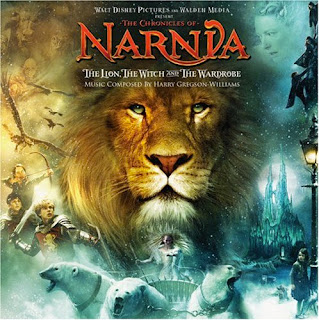
The Chronicles of Narnia is a series of seven books written by C.S. Lewis. We have seen the film made of the first of these, The Lion, the Witch ant the Wardrobe. This book, and film, is
about the four children Lucy, Edmund, Susan, and Peter, and their first visit to Narnia. At this point, the White Witch is the leader of Narnia, and the four children have to kill her in order to make peace in Narnia again. They are considered the four rightful kings and queens of Narnia, and have many people who help them. There are many legendary creatures in Narnia, such as fauns, unicorns and mermaids, andall the animals can talk as well.
Clive Staples Lewis was born in Ireland in 1898. He was an educated man, but he is most known for his books about Narnia. He was a close friend to J.R.R. Tolkien. The two authors and their main works have some things in
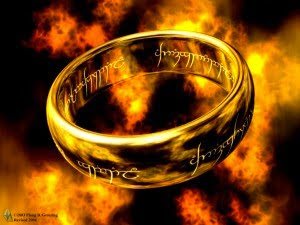
common. Tolkien’s The Lord of the Rings is a series of four books. This includes the Hobbit, which is the very beginning of the rings of power, and tells about how Bilbo Baggins came in possession of the One Ring.

Both of Tolkien and Lewis’ series is located in a country that does not exist. They both created their own world for their characters. Unlike Tolkien, Lewis also includes real places, like London. Both the characters in the two series go through distressing and difficult tasks, and in both of the stories, the imagined world is at war. Tolkien has also included creatures in which we don’t know of from the real world, such as hobbits, orcs, and dwarfs.

But there are also some differences. Tolkien made his own language, and trough the series of the Lord of the Rings, he makes a tale in which some of the characters speak the language. He made the elvish language, which is spoken by the elves. I think that his story is much more detailed and thought trough. Lewis has decided that the time in Narnia goes faster than the time in the real world. This means that the children can sta
y in Narnia for years, while it in London only has passed 10 minutes. This also means that many years pass when they are absent. The problem is that Lewis is not consistent in this matter. Between the second and third book, many months pass between their visits to Narnia, and
when they finally arrive, prince Caspian is still alive. This should not have been possible if he had kept to his own rules. I also felt that he was a bit short on ideas after a while, and that some of the books could have been made into one. But I defiantly see wh
y they are such a huge success. I found The Lord of the Rings much more detailed and filled with action. I enjoyed both of the series, but I would recommend the Lord of the Rings.


Information on Lewis and Tolkien can be found at: http://atheism.about.com/od/cslewisnarnia/a/jrrtolkein.htm

Wednesday, December 8, 2010

Christmas


“Deck the halls with boughs of holly
Fa-la-la-la-la, la-la-la-la'Tis the season to be jollyFa-la-la-la-la, la-la-la-la
Don we now our gay apparel
Fa-la-la, la-la-la, la-la-la.
Troll the ancient Yule-tide carol
Fa-la-la-la-la, la-la-la-la.”
(Deck the halls)

We all know this song, at least from the Disney shows they show on TV in Norway during Christmastime. However, some people do not find Christmas jolly at all. Many people around the world have a hard time making ends meet, even more thinking of Yule-presents. For these people, Christmas can be really stressful and nerve wrecking.

But of course, many people have a much harder life altogether. In Africa, HIV and AIDS are common diseases. Deceases strike, also during the holidays, so there is no difference between Christmastime and other parts of the year. People in these continents are poor, and barely educated. The hygienic conditions are bad; making diseases spread fast trough polluted drinking water. These people don’t care about Christmas presents, but how to survive the coming year. In the western parts of the world, we use millions and millions of dollars to buy presents. Still, the question to ask ourselves is this, what if some of this money went to charity?


The Killers, a sensation

Every year since the Killers got together, they have made a Christmas single, where every single dollar of their income goes to the Global Fund to fight AIDS in Africa. They started this in 2006, with their single A great big sled. This single was in cooperation with Toni Halliday. In 2007, they released Don’t Shoot me Santa. In 2008, they released Joseph, Better you than me, together with Elton John and Neil Tennat. In 2009, they published ¡Happy Birthday Guadalupe! This single was also a cooperation project, but this time with Wild Light and Mariachi El Bronx. In 2010, they published Boots, and all the income from these singles has been given to charity, as mentioned earlier.

The Killers is a very acknowledged band, with many fans all over the world. Therefore, I think this act is even more touching, because they could have earned a lot on these singles. Another prospect of it is that these songs are very well planed and thought trough, which make them great hits. Giving the income of such big successes as these is a big-hearted action. One person can not change the world by himself, but together we can make a difference. I believe that actions like this, and using ones talents to change another human's life for the better, is really kind. But, isn't that what Christmas is all about?Doing something as selfless as this? If everyone started to act upon a greater good, I think we can make a difference together. Why not start by listening to the Killers, Boots? Let us hope the Killers will keep this tradition alive, and that we get to hear many great, new songs from them in the future.

Marry Christmas, and a Happy new year to you all!

If you want to see the video made for Bo
ots, use the link below. Every time it is showed, 5$ dollars is donated to the Global Fund to help fight AIDS in Africa.


The complete lyrics for Deck the halls:
Picture of Mickey Mouse & friends:
Picture of the cover for Boots:
Picture of the Killers:

Friday, November 26, 2010

Japan and Anime

Today, we had a quite free lesson, where we were to work on Japanese culture. We were able to do whatever we wanted to, as long as it had something to do with this topic, and the point was to learn about Japan. The teacher gave us three texts that were related to the topic.

I started by reading the texts and writing notes. I think this was a good start, because that gave me useful background information on the topic. The notes were a good idea when I sat down with Eline, Julie and Heidi and watched Anime. We watched Ouran High school Host Club. The anime was from a high school where we got to see what the students did, and how they acted. This anime was a good example to illustrate the facts I had just read about. However, this anime was not very dark. I thought it was very fun to see what so many people around the world find so fascinating. In the Anime, I found many of the same characteristics that you can find in many other cartoons and films. In the Anime, the main character was a regular girl with no superpowers. Her schoolmates had their faults, and none was like the American dream- male or female. This gives the series personality, and also, this makes people able to relate more to the stories. In the anime, I also found characters that are similar with famous characters from the west, like Fred and George Weasley. Their behavior were very similar, indeed, as wel as the fact that they were identical twins too.

Fred and George Weasley
Hikaru and Kaoru Hitatchin


Of course, there are a lot of differences between the Japanese Anime, and our western comics. First, like I’ve mentioned, the main character in Anime is a regular person. The Anime also refer a lot to the culture in Japan. The culture in clothing and greeting are being showed trough the Anime, giving its fans a quick impression of the society most of the Japanese people live in. You also see Japan in the houses and gardens in the series.

I have learned a lot this lesson. I have personally found Anime a waste of time earlier, but now, my eyes have opened to the brilliance of this way of letting the world know Japanese culture. I also figured that it was a good idea to start by reading a little on the background information, and ending the lesson by seeing a real example.


The picture of Fred and George:
The picture of Hikaru and Kaoru:

Wednesday, November 10, 2010

The Film vs. The Book

For this entry, I am to choose one of the passages in the movie and relate it to the book. The passage or scene that I will analyze is the first time Amir meets Rahim Khan in many years. He has traveled all the way from America to Pakistan to meet Rahim. Khan is very sick. He has one last request of Amir; to go back to Kabul and save Hassan’s only child, a boy called Sohrab. In the book, this is an emotional part, and a part where Amir also finds out how close he and Hassan actually was. It is also an big turning point, where Amirs life in America is changed forever. I think that this is the first warning that something dramatical is about to unfold, and that the scene and all the emotions involved are essential towards the developement of the story. In the movie, I didn’t get that feeling. The scene was a bit too short and impersonal to meet my expectations. I also feel that it was given very little attention and importance.

I feel that this is the general mistake in the movie. The scenes are to short and lacks a lot of important details, like Hassan’s hare clipped lip, Ali being crippled, Assef having blonde hair, and I think they cut out too much on their life before the Kite fight that fatal winter. This makes the whole change in atmosphere less noticeable, and Amir’s failure less clear. Therefore, I am actually a bit disappointed of the film, and there are many things I would have done differently if I were to make the movie. This made me want to give the movie not more than 4, but mostly it gets this because I like the book so much it feels wrong giving it less...

Monday, October 11, 2010

For you, a thousand times over

This will be the last time I write on the blog about the Kite Runner. I have chosen to use this entry as a summary of the book, as well as a summary of my own emotions and thoughts about the book. What could possibly be a better name for the entry, than the famous quote from the book “For you, a thousand times over”? This one sentence that in so many ways illustrates the deep satisfaction and admiration Hassan feels for Amir. The great failure from Amir, not being able to see the great friend he has in the hare-clipped Hazara boy, going to catch the last fallen kite for him. I feel my eyes watering just by writing this now. Hassan was truly a great human being, which was at the wrong place at the wrong time all his life. And despite his bad luck, he still smiled as though the world had shown him the bright sides only. This is clear to read from the letter he writes to Amir: “(…) The streets are full enough already of hungry orphans and every day I thank Allah that I am alive, not that I fear death, but because my wife has a husband and my son is not an orphan. (...)” I think this draft from his letter shows us quite well where the focus of Hassan is lying.

Amir is another kettle of fish, entirely. His focus is, exclusively, on himself, and his own needs. He does not care what is going to happen to Ali and Hassan when he purposely accuses Hassan of stealing. Neither does he have the courage to tell Baba what happened to Hassan in that alley, the winter of 1975. But people can change, and that we learn from Amir’s amazing journey to save the now orphaned Hazara boy, his half- nephew Sohrab. This change gives us hope that there still is hope for the Human Race, and that everyone can change for the better.

This book is filled with so many emotions and devotions, between brothers, friends, fathers and sons, and between inhabitants in a whole country, it is for me impossible to say it all in words. This book is an emotional rollercoaster, where you go from laughing to crying in a matter of ten pages, where your whole impression of a character changes in no time, and you end up thrilled, exited and wounded deeply at the same time. This book is brilliant in so many ways, but mostly because it has got sole. It illustrates the sole of two boys so unbelievably different, but so amazingly similar. Thank you, Khaled Hosseini, for a most extraordinary book!

Hassan's letter can be found at page 189 in the book.
The picture is from the Movie, when Amir reads to Hassan. it is from: www.200movies1woman.com/2010/10/09/the-kite-runner

Friday, September 24, 2010

Do not read this if you haven't read the book!

By the end of this class, I am at page 239. Hassan is Amir’s half brother. Baba is Hassan’s father…

Hassan has a family, a wife and a son in Kabul. He has learned to write and read, and has learned to his son, which is named Sohrab, after Hassan’s favorite novel. Amir learns this from a letter Hassan wrote him. By the time Amir reads this, Hassan is dead. He and his wife were shot by Taliban. Sohrab is an orphan, and Rahim Kahn wants Amir to get him out of Kabul.

Right now, Amir is at a soccer- field, watching two people being stoned to death. He is at the soccer- field to find Sohrab, who has been kidnapped by the Taliban.

The Kite Runner

Before class today, I am currently at page 178, Amir has just traveled to Pakistan, and Rahim Kahn.

It has happened a lot to Baba, Amir, Hassan and Ali since last time I wrote here. The relationship between Amir and Hassan is really bad. Amir is driven by guilt, and Hassan doesn’t know what he has done. After Amir’s birthday, he plants his new wristwatch and a handful of money under Hassan’s bed. Then he asks Baba where his watch is. This is Amir’s way of forcing Ali and Hassan to leave, and so they do.

At the age of eighteen, Amir travels with Baba to Pakistan. They escape from an Afghanistan tore by war. At the trip, Baba shows himself as a gentleman, as always. In the US, Baba works his head off. His hands are black from oil and dirt from the gas- station, and he is soon promoted as “daily manager”. Every Sunday, they go to the Flea Market where they sell second- hand items for a dollar more then they bought them. At the market, Amir meets the Taheri- family. Their daughter, Soraya, and she is at Amir’s age…

Baba gets cancer. For a long time, this illness demands a lot of attention in Amir’s life. After months of illness, Amir asks Baba to go and ask the Taheri for their daughter’s hand. Amir and Soraya marry each other, and a couple of weeks later, Baba dies…

Many years pass, and Amir and Soraya are happily married. One day, Amir receives a phone call. The person calling is Rahim Khan. He says that it is a way to be good again, and asks him to come to Pakistan before he dies…

Sunday, September 19, 2010

the Kite Runner

This semester, we are reading the Kite Runner, by Khaled Hosseini. I started the book on Friday, and I am currently at page 88, chapter nine.


The book starts with Amir talking to us from his grown up life. I know this because I have read the book before. In the first chapter, we are back in Kabul, where Amir grew up. This is a novel about a boy who really wants to be acknowledged by his father, Baba. Baba doesn’t give Amir enough attention, and Amir feels like a stranger in his own house. He explains this as “At the dinner table, the only thing speaking, was the silverware against the plates.” He finds support in Hassan, the servant’s boy. He and his father, Ali, is descended from the Hazara people. They are treated like dogs by every Afghan, but at Amir’s house, Ali and Hassan are treated with as much respect as a servant can get. The thing that bothers Amir the most is that Baba keeps a nice eye at Hassan at all times, as if Hassan was his son, and not Amir…


Every winter, Afghanistan’s children perform the Kite fights. The game consists of children with Kites, and the point is to try and cut the opponents kite down, and be the last kite flying. In the winter of 1975, Amir wins this tournament, and Baba is very proud. Another part of the tournament is to run for the fallen kites. The children station themselves at different spots around the city to try and get a head start. Hassan is the best of these Kite Runners. This day, Hassan runs for the last kite for Amir. As he runs to the opposite corner of the square where the championship where held, Hassan turns his head and calls: “For you, a thousand times over”. I think that one sentence summarize Hassan’s personality. He does anything for Amir, his best friend in the whole world.


Amir, at the other hand, teases Hassan all the time, and is a coward himself. He never stands up for Hassan, even when he is raped by Assef in a shabby alley. Hassan is there to pick up the kite for Amir, and Assef and two other guys gets there and tease him. They try to force him to give them the kite, but Hassan says “The kite is for Amir”. What Hassan doesn’t know, is that Amir stands and watches the whole episode, and then runs...


After this, Amir is driven by guilt for not interfering. It ends with Hassan saying: “I don’t know what I have done, Amir agha. I wish you’d tell me (...) You can tell me, I’ll stop doing it.” This statement from Hassan kills me inside, every single time I read it. How can a person be so kind? He scarified himself for Amir and that stupid kite, and all Amir was able to do was to run for his life! That's enough for this time, and I’ll try not to rip Amir to peaces until next time…


(The picture is the oridginal cover of the book, and I found it at: www.thebookclubblog.co.za/?p=688 (19.09.10)

Friday, September 17, 2010

Advice to fellow students

This entry is dedicated to the article about Facebook, and how it affects the students and their work for the exam.


The article at http://www.telegraph.co.uk/technology/facebook/7985985/Facebook-hits-exam-results-by-20-per-cent.html20-per-cent.html has compared the exam-results of students using Facebook, and students not using it. The results were unambiguous. It says that students using Facebook in class or during the study- process get an average of 20% lower score than the students without Facebook.


The first thing that comes to mind, is that this news is very shocking, that highly educated people let a forum like Facebook, ruin their exam results! You wouldn’t think that anyone is stupid enough to do that. But then, Facebook, Twitter, Skype, MSN and a lot of other communicational forums are demanding more and more of our time. In today’s society and study- situation, we are very often depending on communication. Students without a Facebook- account, easily fall out of the social gangs and environment in class. Me, I got Facebook when I started my first year at Sandvika high school. When I think about it, Facebook is a genius way to connect and find mutual interests, even if the only thing mutual, is attending the same class. I think I would have missed a lot of information about my fellow students without it. At the same time, I feel that Facebook demands a lot of attention. When I am studying, I can’t allow myself to open Facebook at all, because then, I will not be able to pull myself out of there.

I just happen to think about those people who used to spend every hour of their time off, at the internet. Before Facebook, I remember thinking “Aren’t they bored to death? It is not that interesting, and don’t they know that they have other things to do?” Now, I would have replied “Well… Facebook certainty demands a lot of time, and attention. I am not surprised that this is a problem.”


I think this illustrates the problem quite well. A couple of years ago, Facebook weren’t that big a problem. As the phenomenon grows, though, so does the amount of people spending a lot of time there. I am very pleased that I am not one of those who feel that they need to use every single moment at the internet. My advice to fellow students is therefore: You should definitely have a Facebook- profile, because it is a part of our future. Just remember that your future is built on what you learn in class, and Facebook can’t be the breadwinner for your future. Use it well!


(The picture is from the article, use the link in the entry! The chat- symbol is from my own Facebook- page, edited in OneNote.)